| ☁ London 16°C

Zambia Election Dispute Deepens as Opposition Leaders Detained After Vote

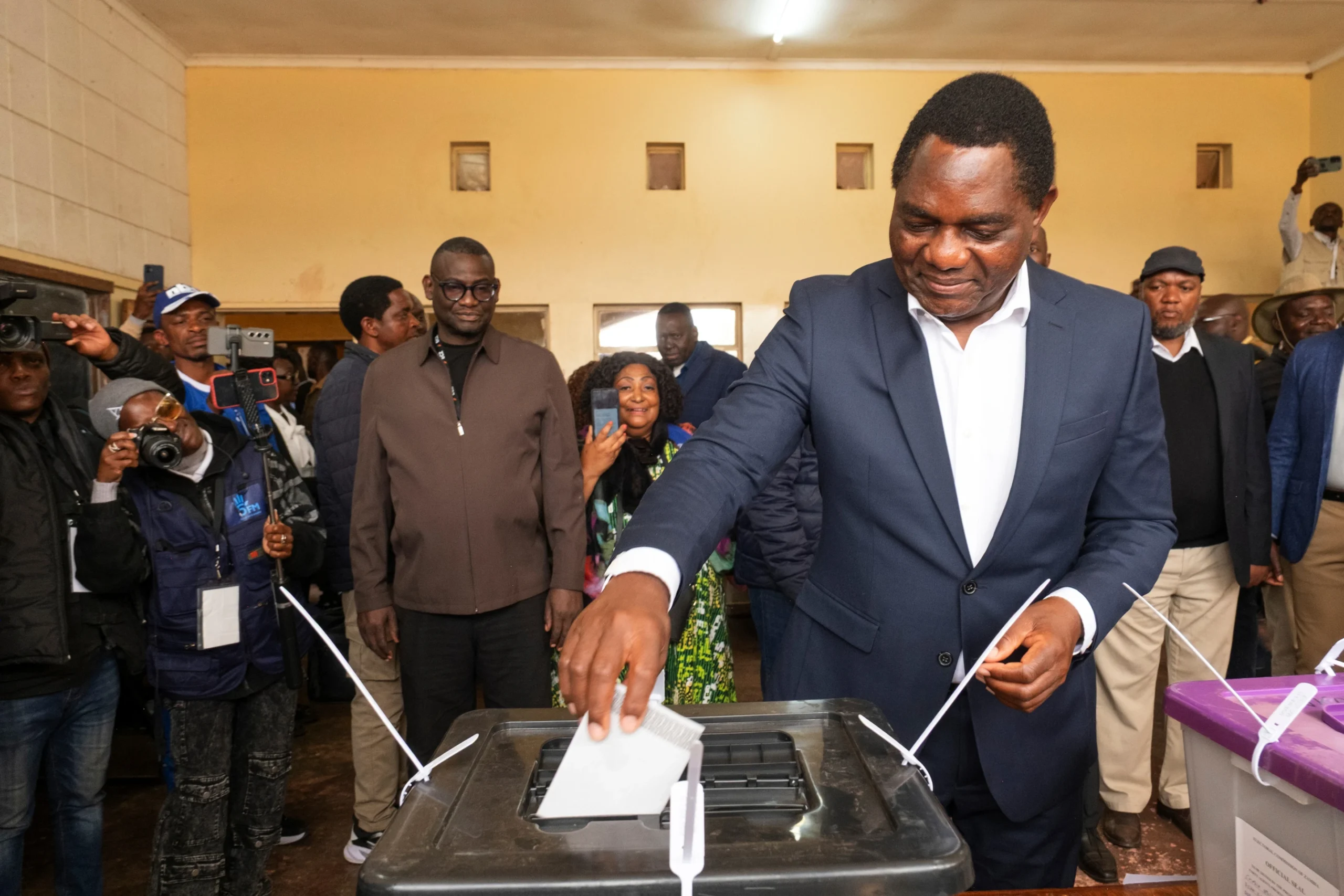
The Zambia election dispute has intensified following President Hakainde Hichilema’s re-election, with his main challenger Brian Mundubile and other opposition figures detained as questions continue over alleged voting irregularities and access to the courts.
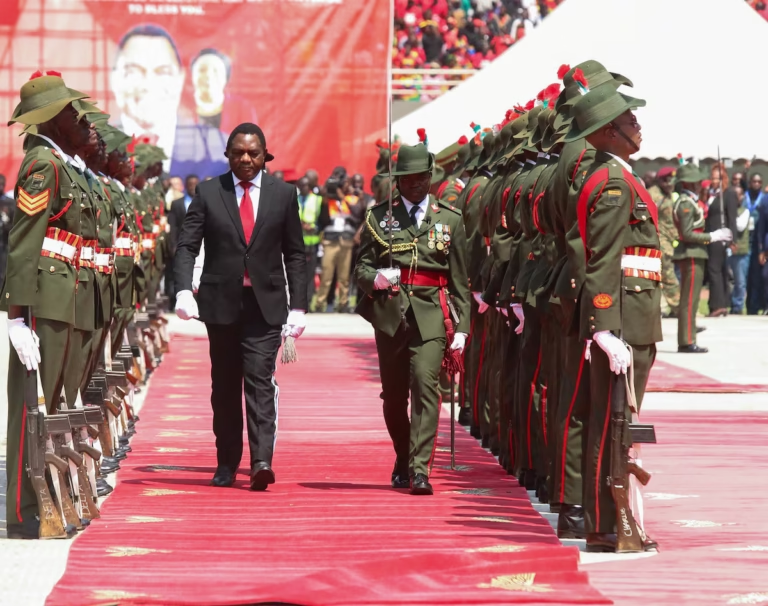
Hichilema was inaugurated for a second term on Tuesday at the National Heroes Stadium in Lusaka after being declared the winner of Zambia’s August 13 presidential election.
According to official results from the Electoral Commission of Zambia, Hichilema secured approximately 60% of the presidential vote, while Mundubile received around 38%.
Mundubile rejected the result and alleged irregularities in the electoral process.
Zambia election dispute follows Hichilema victory
Hichilema was officially declared the winner on August 18, clearing the way for another five-year term.
His inauguration brought thousands of supporters to the National Heroes Stadium and was attended by several African leaders.
However, the political developments surrounding the election have drawn significant attention.
Mundubile challenged the credibility of the result and subsequently went into hiding after security forces reportedly raided his home following the election.
He later sought refuge with his running mate, Makebi Zulu, at a United Nations facility before both men surrendered to police on August 24.
Mundubile and running mate detained
Following their surrender, Mundubile and Zulu were detained.
By the time of Hichilema’s September 1 inauguration, the two opposition politicians were being held at Mukobeko Maximum Security Prison.
Mundubile has faced treason charges, adding another dimension to the political confrontation following the election.
The detention of the opposition figures has attracted attention because Zambia has historically been regarded as one of southern Africa’s countries with a record of competitive multiparty elections and peaceful transfers of power.
The country returned to multiparty democracy in 1991 and has since experienced changes of governing parties through elections.
Court access becomes part of election controversy
The Zambia election dispute has also focused on access to the country’s courts during the period when candidates could challenge election results.
The Associated Press reported that Zambia’s courts were closed during part of the period available for legal challenges to the election outcome.
The circumstances surrounding the closure became particularly controversial because the opposition was seeking to contest the presidential result.
Government officials cited security concerns surrounding the courts.
The government later said the constitutionally prescribed period for filing a presidential election petition had expired without a petition being received, allowing the inauguration process to proceed.
The opposition has disputed the circumstances surrounding that process.
Election observers raise concerns
Questions surrounding the election extend beyond the opposition’s allegations.
Observers cited problems during and after the August 13 vote, including reported irregularities in the tallying process and the presence of soldiers at some polling locations.
The election period also saw arrests of opposition politicians.
These developments have prompted scrutiny of the country’s democratic institutions even as Hichilema begins his second term.
The existence of alleged irregularities does not itself establish that the official presidential result was incorrect, and the Electoral Commission declared Hichilema the winner.
Hichilema addresses opposition voters
During his inauguration, Hichilema sought to acknowledge Zambians who had supported rival candidates.
He told supporters that his government had heard the voices of those who voted for other candidates and parties.
The remarks came as his administration begins another five-year term amid political divisions created by the election and its aftermath.
Hichilema first became president in 2021 after defeating incumbent Edgar Lungu.
His original victory was viewed as another peaceful transfer of political power in Zambia.
The developments surrounding the 2026 election therefore carry broader significance for the country’s democratic reputation.
What happens next in Zambia?
Attention will now focus on the legal cases involving Mundubile, Zulu and other opposition figures as well as the government’s handling of political opposition during Hichilema’s second term.
Economic issues will also remain central for Zambians, particularly employment, living costs, public debt and the country’s strategically important copper industry.
For the government, the beginning of a new term brings the challenge of pursuing its economic agenda while responding to questions surrounding the electoral process.
For opposition parties, the arrests and election dispute are likely to shape Zambia’s political environment well beyond inauguration day.
BBNN will continue monitoring political developments in Zambia, including the legal proceedings involving opposition leaders and the beginning of President Hichilema’s second term.