| ☁ London 16°C

Zambia’s Hakainde Hichilema Sworn In for Second Term After Disputed Election

Hakainde Hichilema was sworn in for a second term as president of Zambia on Tuesday following an election that opposition figures disputed and election observers said was affected by irregularities.
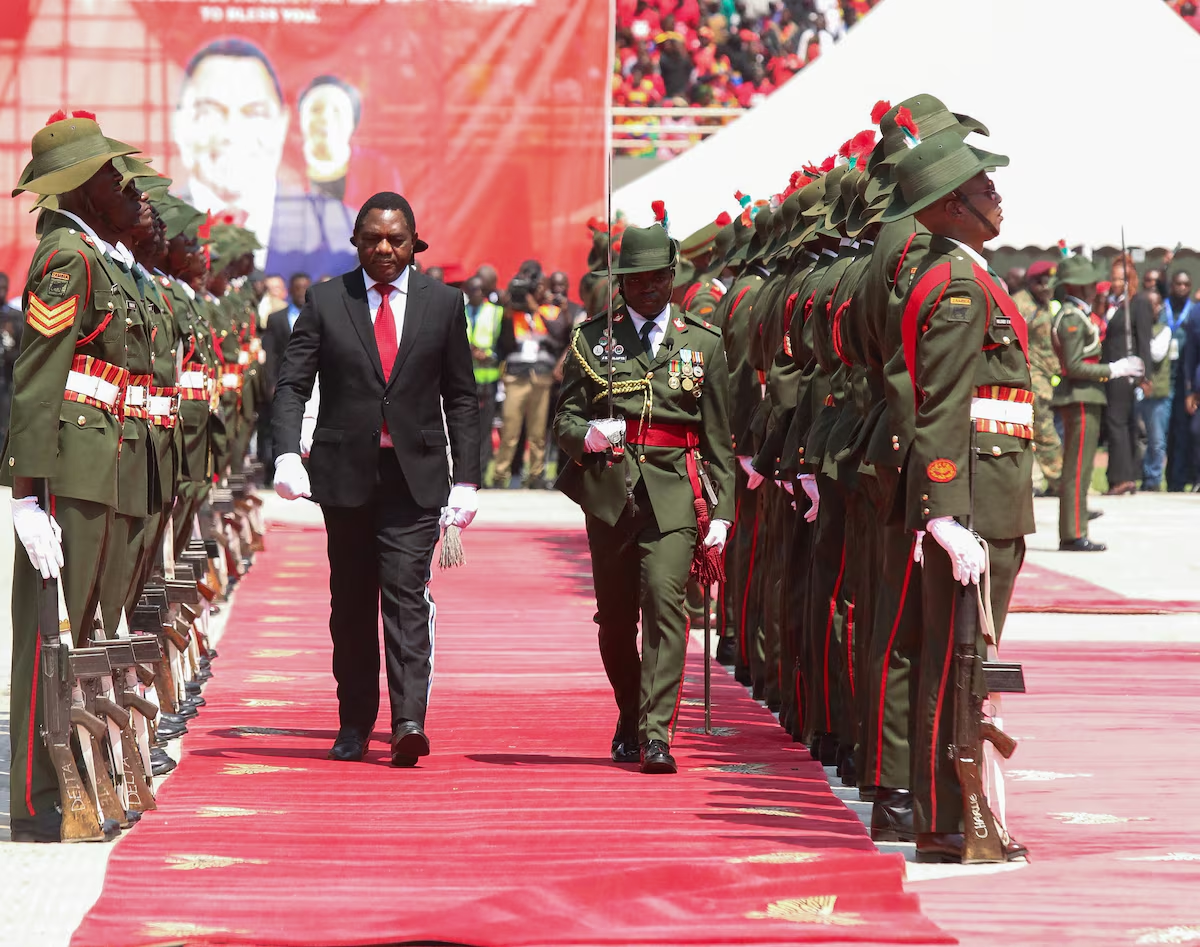
Hichilema took the oath of office at National Heroes Stadium in Lusaka, where thousands of supporters gathered for the inauguration. Zambia’s Chief Justice Mumba Malila administered the oath, according to the Zambian government.
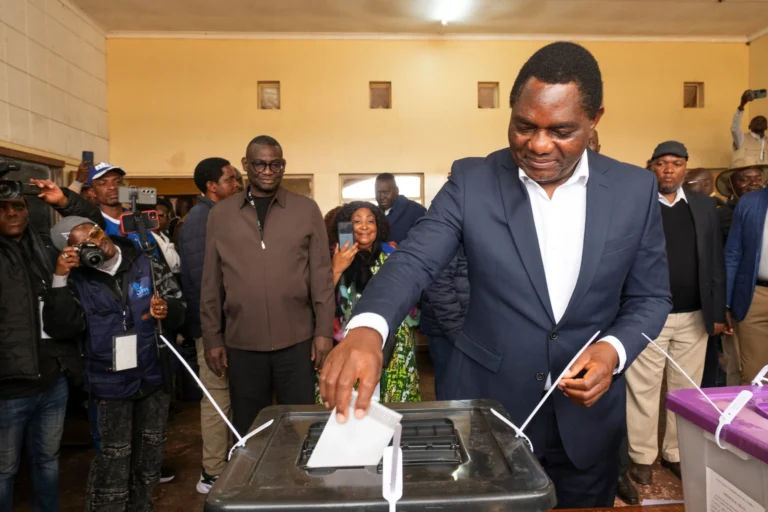
The ceremony formally began Hichilema’s second term following the August 13 presidential election, in which the Electoral Commission of Zambia declared him the winner with about 60% of the vote. His principal challenger, Brian Mundubile, received approximately 38%.
Hakainde Hichilema begins second term
Hichilema addressed supporters after taking the oath and said his government recognised the choices of Zambians who supported both the governing party and the opposition.
Vice President Mutale Nalumango was also sworn in for a second term during the ceremony.
Several African heads of state and international representatives attended the inauguration. Zambia’s Ministry of Foreign Affairs said delegations included leaders or representatives from Botswana, Namibia, Kenya, Zimbabwe, Tanzania, Eswatini and Lesotho, alongside representatives from China, the United States and several other countries.
The presence of senior American and Chinese representatives also highlighted Zambia’s international importance. The country is a major copper producer and has attracted considerable attention from both Washington and Beijing because of its mineral resources.
Election followed by allegations of irregularities
The inauguration came against the backdrop of disputes over the August election.
Mundubile rejected the result and alleged voting irregularities. Reuters reported that international and local observer reports identified indications of irregularities in the tally, although the reports concluded that Hichilema would have won regardless. The Electoral Commission of Zambia told Reuters that allegations concerning discrepancies should be dealt with by the courts.
The election period also saw the deployment of soldiers at some polling and counting locations, arrests of opposition figures and controversy surrounding access to the courts.
Zambia’s Cabinet Office said on August 25 that the constitutionally provided seven-day period for filing a presidential election petition had expired without the judiciary receiving a petition, clearing the way for the September 1 swearing-in.
Opposition leader detained on treason charges
The political dispute intensified with the detention of Mundubile and his running mate, Makebi Zulu.
Both men surrendered to police after having sought refuge following the election and were subsequently charged with treason, according to Reuters and AP. Authorities had provided limited public detail about the allegations at the time, while a lawyer representing the accused said they would defend themselves in court.
The arrests and other developments surrounding the election have generated debate over the state of Zambia’s democratic institutions.
Zambia has held regular multiparty elections since returning to multiparty democracy in 1991 and has experienced several peaceful transfers of presidential power.
Economy remains major issue for second term
Beyond the political dispute, Hichilema begins his second term facing significant economic expectations.
His first administration oversaw Zambia’s emergence from a prolonged sovereign debt restructuring process and pursued policies intended to attract international investment.
Copper will remain particularly important. Zambia is one of Africa’s major copper-producing countries, making the country’s economic policies significant to global mining and critical-minerals markets.
Reuters reported that financial markets remained relatively resilient following the election, with Zambia’s international bonds outperforming a broader African benchmark in the period following the vote.
Hichilema said at the inauguration that his first term had focused on stabilising the economy and that his second administration would focus on economic growth.
What comes next for Zambia?
The beginning of Hichilema’s second term puts attention on how his administration will address both Zambia’s economic priorities and concerns raised about the electoral process.
The government will face pressure to improve living standards, attract investment, manage public finances and expand an economy strongly connected to copper and other mineral resources.
At the same time, the treatment of opposition politicians and the handling of electoral disputes are likely to remain closely watched by domestic groups and international observers.
BBNN will continue to follow political and economic developments in Zambia as Hichilema begins his second presidential term.