| ☁ London 16°C

DR Congo Ebola Outbreak Surpasses 6,000 Cases as Death Toll Tops 3,000

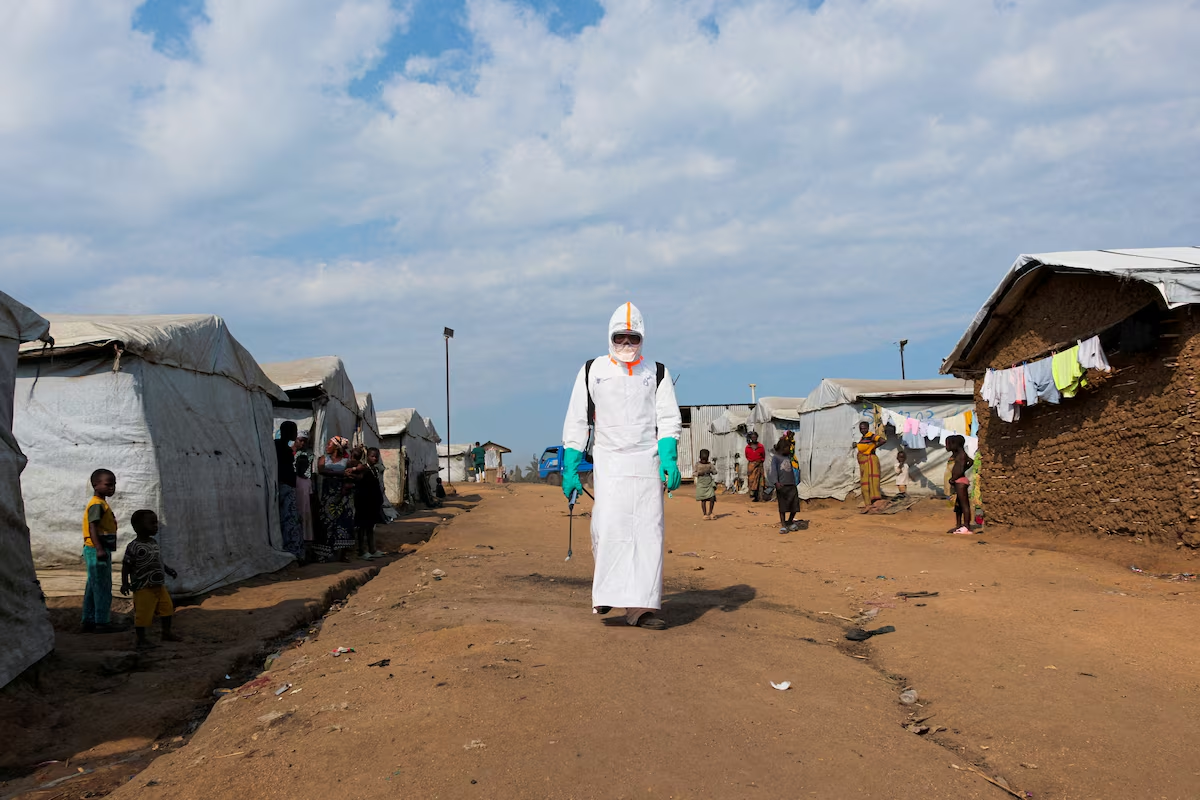
The Democratic Republic of the Congo is battling its largest recorded Ebola outbreak, with confirmed infections surpassing 6,000 as health authorities and international partners race to contain continued transmission across several provinces.
According to an Africa Centres for Disease Control and Prevention epidemic intelligence update published on September 1, the Democratic Republic of the Congo had recorded 6,186 confirmed cases and 3,007 deaths.
The latest figures underscore the severity of an outbreak that has spread across 60 health zones in six provinces, placing mounting pressure on health facilities, frontline workers and communities.
Ituri remains the epicentre
Ituri Province remains the epicentre of the outbreak, accounting for the overwhelming majority of confirmed infections.
Africa CDC reported that the country recorded 86 new confirmed cases on August 31, including 49 in Ituri, 32 in North Kivu and five in Haut-Uélé.
Fifty-seven deaths were also reported during the latest daily reporting period.
Response operations are focusing particularly on Ituri, North Kivu and Haut-Uélé, where transmission remains active.
The outbreak is caused by the Bundibugyo virus, one of the viruses capable of causing Ebola disease.
Largest Ebola outbreak recorded in DR Congo
The current epidemic has surpassed the Democratic Republic of the Congo’s previous largest Ebola outbreak, which occurred between 2018 and 2020.
The World Health Organization had already confirmed in August that the ongoing outbreak had become the largest Ebola outbreak ever recorded in the country, regardless of Ebola virus species.
By August 26, WHO had recorded 5,794 confirmed cases and 2,786 deaths in DR Congo. The subsequent rise to more than 6,000 cases demonstrates the continuing pace of transmission.
The outbreak has affected six of the country’s 26 provinces: Ituri, North Kivu, South Kivu, Haut-Uélé, Tshopo and Bas-Uélé.
Health teams intensify response
Congolese authorities, Africa CDC, WHO and other response partners have expanded surveillance, laboratory testing, treatment capacity, contact tracing and community engagement in an effort to interrupt transmission.
Health authorities face significant challenges in some affected areas, including insecurity, population displacement, limited access to healthcare and difficulties reaching communities.
These conditions can delay the detection and treatment of infected people and make contact tracing more difficult.
The Bundibugyo strain presents an additional challenge because there are currently no approved vaccines or specific treatments for Bundibugyo virus disease. Outbreak control therefore relies heavily on rapid detection, isolation and supportive care, contact tracing, infection prevention, safe burials and community engagement.
International concern grows
The scale of the epidemic is also raising concerns about the possibility of further cross-border transmission.
Uganda previously recorded cases linked to the wider outbreak, although its outbreak was declared over on July 28.
International assistance to DR Congo is meanwhile increasing as authorities attempt to bring the epidemic under control.
The United Kingdom announced on September 1 that it would provide more than £50 million in additional funding to support efforts to contain the outbreak.
The funding comes as health agencies continue to strengthen treatment facilities, surveillance systems and regional preparedness.
What happens next?
Containing the outbreak will depend on identifying infections quickly, isolating patients, tracing contacts and ensuring communities have access to reliable information and healthcare.
Health authorities are also expected to continue monitoring neighbouring countries because movement across borders creates the possibility of infections spreading beyond affected areas.
With thousands of confirmed infections and more than 3,000 deaths already reported, controlling the outbreak remains one of Africa’s most urgent public-health challenges.
BBNN will continue to monitor developments from the Democratic Republic of the Congo and provide updates as new information becomes available.