
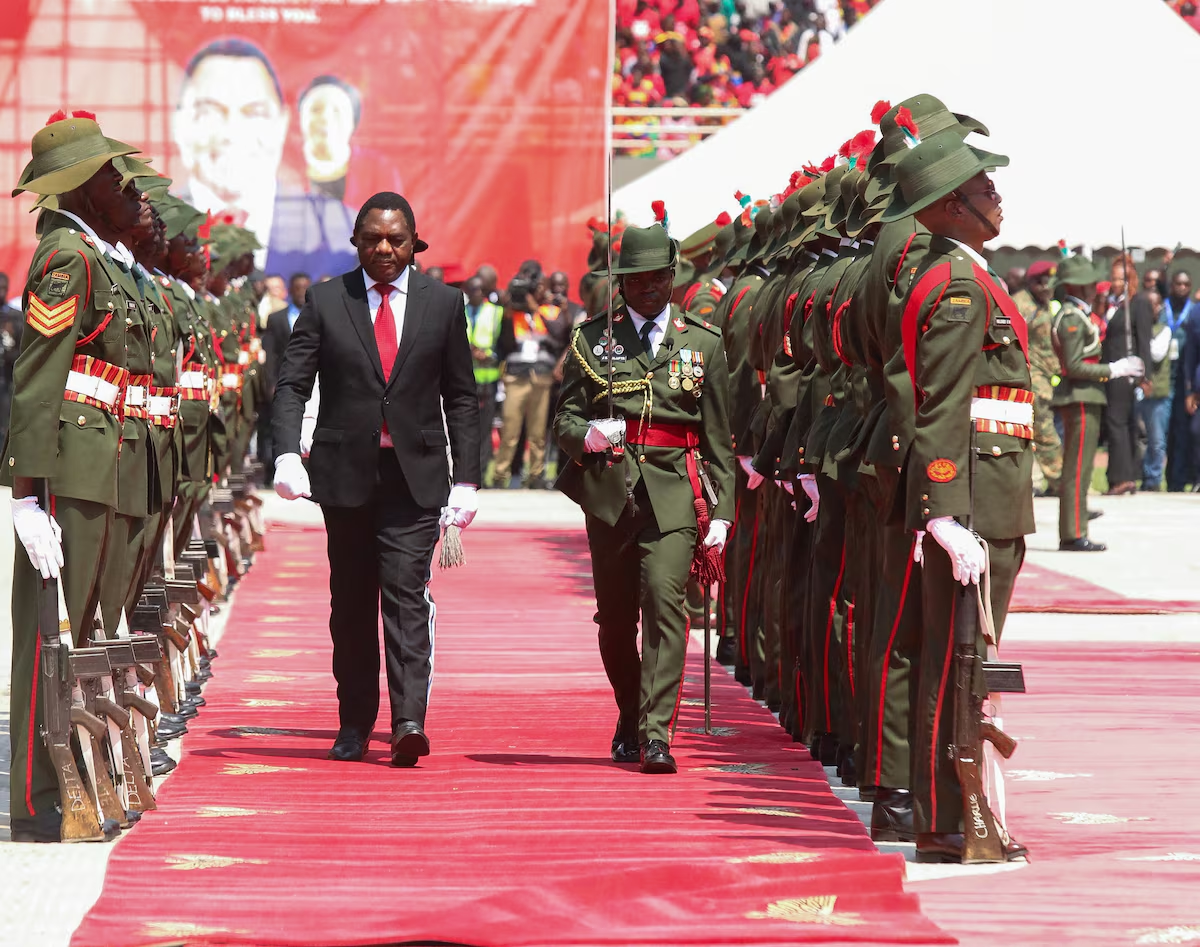
Zambia’s Hakainde Hichilema Sworn In for Second Term After Disputed Election

LUSAKA, Zambia — Zambian President Hakainde Hichilema was sworn in for a second term on Tuesday, September 1, beginning another five years in office following an election overshadowed by opposition arrests, allegations of irregularities and concerns about the state of the country’s democracy.
Hichilema took the oath of office at the National Heroes Stadium in Lusaka before thousands of supporters and visiting dignitaries. Vice President Mutale Nalumango was also sworn in for another term.
The inauguration followed Zambia’s August 13 presidential election, in which official results gave Hichilema approximately 60 percent of the vote. His main challenger, Brian Mundubile, received about 38 percent.
Mundubile disputed the result and alleged irregularities in the electoral process. Election observers also raised concerns about aspects of the vote and the tabulation process, adding political tension to what would otherwise have been a celebration for Hichilema and his governing United Party for National Development.
The controversy intensified in the period between the election and Tuesday’s inauguration.
Mundubile and his running mate, Makebi Zulu, were arrested and charged with treason after spending time seeking refuge at an international facility. They have denied wrongdoing. Other opposition figures have also faced arrests following the election.
Hichilema Promises Growth and Opportunity
Despite the political tensions, Hichilema used his inauguration to focus heavily on Zambia’s economic future.
His government enters its second term after overseeing significant economic reforms during the previous five years, including efforts to restructure Zambia’s debt and restore international investor confidence.
Zambia became Africa’s first sovereign default during the COVID-19 era in 2020, before Hichilema came to power in 2021. His administration subsequently worked with international lenders and creditors on a debt restructuring programme while pursuing broader economic reforms.
At Tuesday’s ceremony, Hichilema presented his second term as a transition from stabilising the economy toward delivering stronger growth and opportunities for Zambians.
The president acknowledged that many households continue to struggle with the cost of living despite improvements in some economic indicators.
His challenge during the next five years will therefore be translating macroeconomic recovery into improvements that ordinary citizens can see in employment, household income, food prices and access to economic opportunities.
Copper Remains Critical to Zambia’s Economy
Zambia’s economic prospects are closely tied to its enormous mineral resources.
The country is one of Africa’s biggest copper producers, giving it increasing strategic importance as global demand rises for minerals used in electric vehicles, renewable-energy infrastructure and other technologies.
China is a major investor in Zambia and an important creditor, while Western governments have also shown growing interest in African critical-mineral supply chains.
Representatives from both China and the United States attended Hichilema’s inauguration, highlighting Zambia’s growing geopolitical and economic importance.
A stronger mining industry could provide the government with additional investment and revenue, but Hichilema faces pressure to ensure the benefits of mineral development reach a broader section of the population.
Political Tensions Shadow Second Term
The president’s economic agenda begins against a more difficult political backdrop.
Zambia has historically been regarded as one of southern Africa’s more stable multiparty democracies, with several peaceful transfers of political power.
Hichilema himself benefited from that tradition when he defeated incumbent President Edgar Lungu in 2021 after years in opposition.
However, developments surrounding the 2026 election have generated questions about political freedoms and democratic institutions.
The European Union’s election observation mission said voters were offered a competitive choice but raised concerns about an uneven playing field and declining transparency during parts of the results-tabulation process.
The opposition’s attempt to challenge the result was further complicated when access to Zambia’s High Courts was restricted before the deadline for filing a presidential election petition. Human Rights Watch criticised the development because of its effect on access to the courts.
Opposition Leader Remains in Custody
Mundubile’s detention remains one of the most significant political issues confronting the new administration.
The opposition leader and his running mate face treason charges that they deny.
The dispute followed a security operation shortly after the election in which a former cabinet minister was killed and several people associated with the opposition were arrested.
Authorities said security forces were responding to a security threat, while Mundubile’s political allies disputed the government’s account.
The situation has raised concerns that Zambia’s post-election divisions could persist even after Hichilema’s inauguration.
Calls are therefore likely to grow for dialogue between the government and opposition as the president begins his second term.
A Critical Five Years Ahead
Hichilema now begins his second and final constitutional term with two major tests.
Economically, his government must turn Zambia’s improving financial position into tangible gains for households while attracting investment and expanding employment.
Politically, his administration faces pressure to demonstrate that Zambia can maintain its reputation for democratic stability despite the bitter aftermath of the 2026 election.
How the government handles opposition figures, electoral concerns, judicial institutions and political dissent could become as important to Hichilema’s legacy as his economic record.
For Zambia’s citizens, the next five years will ultimately be judged not only by economic statistics but by whether economic recovery produces better living standards while the country’s democratic institutions remain strong.
BBNN — Where Truth Breaks First.